
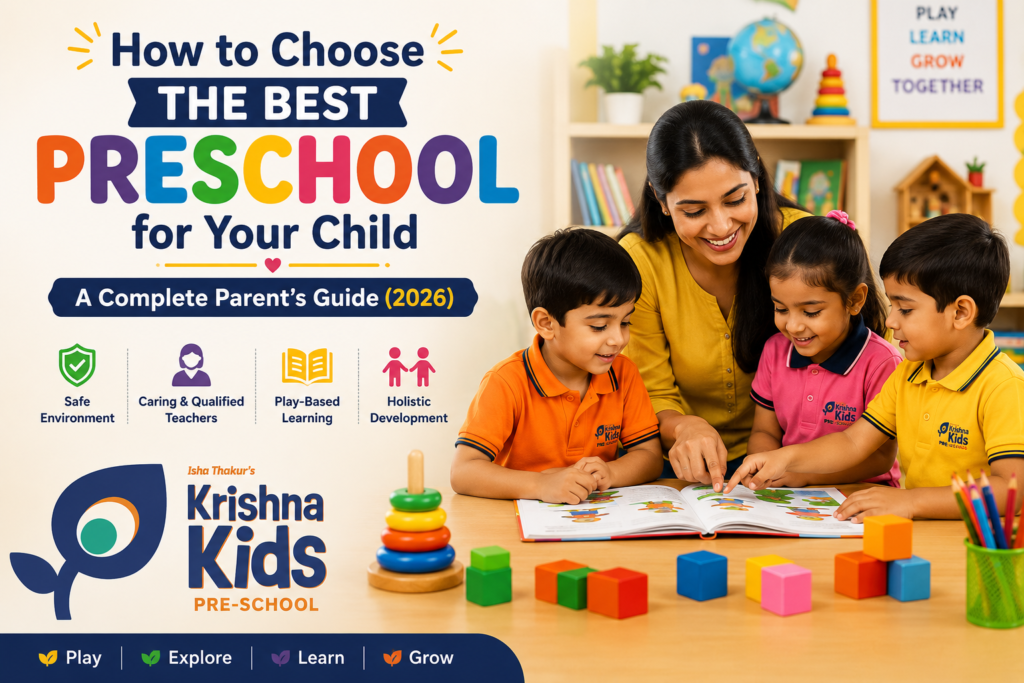
Imagine this moment.
It is your child’s very first day of preschool.
Tiny hands hold tightly onto yours. Curious eyes look around the colourful classrooms. New faces, cheerful teachers, bright toys, tiny tables, and joyful laughter fill the room. As a parent, your heart is filled with excitement—but also countless questions.
Will my child be happy here?
Will the teachers truly understand my child?
Is this the right place to begin my child’s learning journey?
These questions are completely natural.
Choosing a preschool is much more than selecting a school close to your home. It is one of the first and most important decisions you make for your child’s future. The early years of childhood are when curiosity grows, confidence develops, friendships begin, and lifelong learning habits are formed.
Today’s parents have hundreds of options. Every preschool promises modern classrooms, smart learning, colourful activities, and experienced teachers. However, not every preschool offers the nurturing environment that young children truly need.
A good preschool should never focus only on teaching the alphabet and numbers. It should help children become kind, confident, creative, independent, and emotionally secure individuals.
This complete guide will help you understand exactly what to look for before selecting the best preschool for your child. Whether you are preparing for your child’s first school admission or comparing different preschool options, this article will help you make a confident and informed decision.
Why Choosing the Right Preschool Matters
Many parents believe preschool is simply a place where children spend a few hours playing before formal schooling begins. In reality, preschool plays a much bigger role in shaping a child’s overall development.
The first five years of life are often called the foundation years because this is when children experience rapid brain growth and begin developing the skills they will use throughout life.
During these years, children learn how to:
- Communicate with others
- Build friendships
- Express emotions
- Solve simple problems
- Explore new ideas
- Follow routines
- Develop confidence
- Become independent learners
A high-quality preschool provides children with opportunities to explore, ask questions, and learn through meaningful experiences rather than memorization.
When children enjoy learning from an early age, they are more likely to remain curious, confident, and motivated throughout their academic journey.
The Science Behind Early Childhood Learning
Research consistently shows that a child’s brain develops faster during the early years than at any other stage of life.
During this period, every conversation, story, activity, song, game, and experience helps build millions of neural connections inside the brain.
These experiences shape important abilities such as:
- Language development
- Memory
- Attention span
- Creativity
- Emotional intelligence
- Social interaction
- Decision-making
- Problem-solving skills
This is why early childhood education is not about giving children academic pressure. Instead, it focuses on providing the right experiences at the right age.
Learning through play, storytelling, music, art, movement, and exploration helps children understand the world naturally while enjoying every moment.
Signs Your Child Is Ready for Preschool
Every child develops at their own pace. Rather than focusing only on age, parents should observe whether their child is emotionally, socially, and physically ready for preschool.
Here are a few common signs that indicate preschool readiness:
Shows Curiosity
Children who enjoy exploring new objects, asking questions, and trying new activities often adapt well to preschool.
Begins Speaking Simple Sentences
Basic communication helps children express their needs and interact comfortably with teachers and classmates.
Enjoys Playing with Other Children
Sharing toys, participating in group activities, and enjoying social interactions are positive indicators.
Can Follow Simple Instructions
Understanding basic directions such as “sit down,” “come here,” or “put your toy away” helps children adjust to classroom routines.
Shows Growing Independence
Simple tasks like eating independently, washing hands, carrying a small bag, or putting away toys indicate increasing confidence.
Comfortable Spending Short Time Away from Parents
Children who gradually become comfortable spending time with grandparents, relatives, or caregivers often adjust more easily during the initial preschool days.
Preschool Is More Than Learning ABCs
One of the biggest misconceptions among parents is that preschool is mainly about teaching reading and writing.
In reality, the best preschools focus on building the complete personality of the child.
Instead of asking,
“Can my child write A, B, C?”
Parents should ask,
“Is my child becoming confident, happy, curious, and emotionally secure?”
Academic skills will naturally develop with time.
Confidence, communication, kindness, empathy, creativity, and emotional resilience are qualities that stay with children throughout their lives.
The right preschool creates an environment where every child feels safe to ask questions, make mistakes, learn through experiences, and discover their own potential.
What You’ll Learn in the Next Part
In the next section, we’ll explore the 10 most important things every parent should check before choosing a preschool, including:
- Safety & Security
- Teacher Qualifications
- Student–Teacher Ratio
- Play-Based Learning
- Classroom Environment
- Hygiene Standards
- Parent Communication
- Curriculum
- Infrastructure
- School Values
These factors will help you confidently compare preschools and choose the environment where your child can truly thrive.
10 Things Every Parent Must Check Before Choosing a Preschool
Every preschool promises a safe environment, experienced teachers, and the best education. Beautiful classrooms and colourful walls certainly create a positive first impression, but the real quality of a preschool goes far beyond what you see on your first visit.
The right preschool is one that nurtures your child’s curiosity, supports emotional well-being, encourages creativity, and creates a foundation for lifelong learning.
Before making your final decision, here are ten essential factors every parent should carefully evaluate.
1. Safety & Security Should Always Come First
No matter how attractive a preschool looks, nothing is more important than your child’s safety.
Young children are naturally curious explorers. They touch everything, run freely, climb furniture, and love discovering new things. A secure preschool environment ensures children can explore confidently without unnecessary risks.
When visiting a preschool, observe the surroundings carefully.
Ask yourself:
- Is the campus clean and well-maintained?
- Are classrooms child-friendly?
- Are electrical points covered?
- Are staircases protected?
- Is the entrance monitored?
- Are visitors recorded before entering?
Parents should also ask whether the school has emergency procedures, first-aid facilities, and trained staff who can respond quickly if a child becomes unwell.
A preschool that prioritizes safety gives parents peace of mind and allows children to learn freely without fear.
Parent Tip: Don’t hesitate to ask about CCTV surveillance, visitor management, and emergency protocols during your campus visit.
2. Qualified, Caring & Passionate Teachers
Children may forget the activities they did, but they always remember how a teacher made them feel.
The best preschool teachers are not simply educators—they are mentors, caregivers, storytellers, and role models.
A great teacher:
- Encourages curiosity
- Speaks gently
- Listens patiently
- Understands every child’s personality
- Celebrates small achievements
- Builds confidence through encouragement
Instead of asking only about qualifications, observe how teachers interact with children.
Do children feel comfortable around them?
Do teachers kneel down while speaking with children?
Do they smile often?
Do they encourage children instead of constantly correcting them?
A nurturing teacher creates an environment where children feel emotionally secure and excited to come to school every morning.
3. Play-Based Learning Is More Effective Than Rote Learning
Many parents still believe that a preschool should teach children to write alphabets, complete worksheets, and memorize numbers.
Modern child development research says otherwise.
Young children learn best through play.
Play-based learning allows children to develop naturally while enjoying the learning process.
For example:
Instead of memorizing colours from a book…
Children paint.
Instead of counting numbers repeatedly…
They count building blocks.
Instead of learning communication from worksheets…
They participate in storytelling and role play.
Play develops:
- Creativity
- Communication
- Confidence
- Problem-solving
- Imagination
- Social interaction
- Emotional intelligence
When children enjoy learning, they remain curious for life.
4. Age-Appropriate Curriculum
Every child grows differently.
A two-year-old and a five-year-old cannot be expected to learn in the same way.
The curriculum should match your child’s developmental stage.
A good preschool gradually introduces concepts according to the child’s age and readiness.
For example:
Playgroup
Focuses on:
- Social interaction
- Sensory play
- Music
- Rhymes
- Free exploration
Nursery
Focuses on:
- Language development
- Basic numeracy
- Fine motor skills
- Creative thinking
Junior KG
Focuses on:
- Reading readiness
- Writing readiness
- Logical thinking
- Confidence building
- Independent learning
Every activity should feel exciting—not stressful.
Learning should always happen naturally through meaningful experiences.
5. Student–Teacher Ratio Matters
Imagine one teacher trying to manage thirty energetic preschool children alone.
It becomes difficult to provide personal attention.
Smaller class sizes allow teachers to:
- Understand every child
- Monitor emotional development
- Encourage participation
- Build stronger relationships
- Identify learning needs early
Ask the school:
“How many children are there in one classroom?”
A balanced student–teacher ratio ensures every child receives the guidance and care they deserve.
6. Clean, Hygienic & Healthy Environment
Young children spend several hours every day inside the preschool.
Therefore, hygiene should never be compromised.
Observe:
- Clean classrooms
- Sanitized toys
- Washrooms
- Drinking water facilities
- Ventilation
- Natural lighting
Healthy habits should also be part of daily learning.
Children should be encouraged to:
- Wash hands regularly
- Keep surroundings clean
- Eat healthy snacks
- Follow hygiene routines independently
These small habits become lifelong values.
7. Learning Environment That Inspires Curiosity
Children learn from everything around them—not only from books.
A thoughtfully designed classroom encourages exploration.
Look for spaces that include:
- Reading corners
- Art stations
- STEM activities
- Building blocks
- Nature displays
- Interactive learning materials
Bright classrooms are wonderful, but meaningful learning spaces are even more important.
Every corner should inspire children to ask,
“What happens if I try this?”
Curiosity is the beginning of intelligence.
8. Strong Parent-School Communication
Parents and teachers are partners in a child’s learning journey.
Choose a preschool that keeps parents informed through:
- Parent-teacher meetings
- Progress updates
- Activity photographs
- School events
- Regular communication
When parents and teachers work together, children feel more supported both at home and at school.
Open communication builds trust and strengthens every child’s learning experience.
9. Opportunities Beyond Academics
Preschool is not only about letters and numbers.
Children also need opportunities to discover their talents.
A well-rounded preschool should include:
- Art & Craft
- Music & Dance
- Yoga & Mindfulness
- Storytelling
- STEM Activities
- Outdoor Play
- Festival Celebrations
- Cultural Activities
These experiences help children develop confidence, creativity, leadership, and teamwork.
10. Values That Shape Character
Education is not only about preparing children for school.
It is about preparing them for life.
Children should learn:
- Kindness
- Respect
- Sharing
- Gratitude
- Honesty
- Responsibility
These values cannot be taught through textbooks alone.
They are learned through daily experiences, teacher behaviour, classroom culture, and meaningful activities.
The best preschool nurtures both the mind and the heart.
Quick Preschool Checklist
Before finalizing a preschool, make sure you can confidently answer YES to these questions:
✅ Is the campus safe and secure?
✅ Are teachers caring and experienced?
✅ Does the school follow play-based learning?
✅ Is the curriculum age-appropriate?
✅ Is the environment clean and hygienic?
✅ Do children receive individual attention?
✅ Are there creative and enrichment activities?
✅ Does the school encourage strong values?
✅ Is communication with parents transparent?
✅ Does your child feel happy and comfortable during the visit?
Questions Every Parent Should Ask Before Finalising a Preschool
Choosing a preschool isn’t just about selecting a beautiful campus—it’s about finding a place where your child will feel happy, safe, and encouraged to grow. Before making your final decision, prepare a few thoughtful questions to ask during your school visit.
1. What teaching methodology do you follow?
Understanding the school’s teaching approach will help you know whether learning is activity-based, play-based, or focused mainly on academics. A balanced preschool encourages children to explore, ask questions, and learn through joyful experiences.
2. How do teachers communicate with parents?
A strong partnership between parents and teachers plays a vital role in a child’s development. Ask how the school shares updates, progress reports, activities, and important announcements.
3. What activities are included beyond academics?
Children learn best through experiences. Enquire about music, dance, yoga, storytelling, art & craft, STEM exploration, outdoor play, cultural celebrations, and special events.
4. How do you help children settle into preschool?
Every child adjusts differently. A caring preschool will have a gradual settling-in process that helps children feel comfortable, confident, and emotionally secure.
5. What safety measures are in place?
Ask about visitor management, CCTV monitoring, first-aid facilities, trained staff, emergency procedures, and child-friendly infrastructure.
6. What is the daily routine?
A structured routine helps children develop discipline and confidence. Understanding the daily schedule gives parents a clear idea of how children spend their time.
Common Mistakes Parents Make While Choosing a Preschool
Many parents unintentionally focus on factors that don’t always reflect the quality of education. Here are some common mistakes to avoid.
Choosing Only Based on Distance
A nearby preschool is convenient, but convenience should never be the only deciding factor. The quality of teaching, environment, and overall development matter much more.
Comparing Only Fees
Lower fees don’t always mean better value, and higher fees don’t always guarantee quality. Focus on the learning experience your child will receive.
Looking Only at Infrastructure
Beautiful classrooms are attractive, but children benefit most from caring teachers, meaningful activities, and a nurturing environment.
Ignoring Your Child’s Comfort
Observe your child’s reaction during the school visit. A child who feels comfortable exploring the classroom is more likely to enjoy the learning journey.
Expecting Academic Pressure Too Early
Preschool is about building confidence, communication, creativity, and social skills—not academic competition.
Why Joyful Learning Creates Lifelong Learners
Children remember experiences more than lessons.
When learning is enjoyable, children naturally become curious, confident, and eager to discover new things. A joyful classroom encourages questions, celebrates creativity, and makes every child feel valued.
Instead of fearing mistakes, children learn to see them as opportunities to grow.
This positive relationship with learning often continues throughout their school life and beyond.
Why Families Choose Krishna Kids Preschool
At Krishna Kids Preschool, we believe childhood should be filled with happiness, curiosity, and meaningful experiences.
Our learning environment is carefully designed to nurture every aspect of a child’s growth while making learning joyful and engaging.
What Makes Krishna Kids Special?
- Play-Based & Activity-Based Learning
- Safe & Child-Friendly Campus
- Experienced & Caring Educators
- Age-Appropriate Curriculum
- Value-Based Education
- Creative Enrichment Programs
- Music, Dance & Yoga Activities
- STEM Exploration
- Festival & Cultural Celebrations
- Strong Parent Partnership
Every smile, every activity, and every achievement is a step towards building confident, compassionate, and lifelong learners.
Frequently Asked Questions
1. What is the ideal age for preschool admission?
Most children begin preschool between 2 and 3 years, depending on the program and their developmental readiness.
2. Why is preschool important?
Preschool develops communication, confidence, creativity, social skills, emotional intelligence, and school readiness during the most important years of brain development.
3. What is play-based learning?
Play-based learning uses games, storytelling, exploration, music, and hands-on activities to help children understand concepts naturally while enjoying the learning process.
4. How do I know if my child is ready for preschool?
Children who show curiosity, basic communication, social interest, and growing independence are often ready to begin preschool.
5. What should I look for during a school visit?
Observe the teachers, classrooms, hygiene, safety, learning materials, student-teacher interaction, and overall atmosphere.
6. How important is the student-teacher ratio?
A balanced ratio allows teachers to provide more personal attention and better support every child’s learning journey.
7. Does preschool only teach academics?
No. A quality preschool focuses equally on emotional, social, physical, creative, and cognitive development.
8. How can parents support learning at home?
Reading stories, encouraging conversations, playing together, appreciating creativity, and maintaining routines all support preschool learning.
Final Thoughts
Choosing a preschool is not simply about selecting a school—it’s about choosing the place where your child’s learning journey truly begins.
The right preschool inspires confidence, encourages curiosity, nurtures creativity, and teaches values that remain with children for life.
Take time to visit schools, observe classrooms, interact with teachers, and trust your instincts as a parent.
Remember, children don’t need the most expensive preschool—they need a place where they feel safe, loved, respected, and excited to learn every single day.
Ready to Give Your Child the Best Start?
Every great journey begins with a single step, and your child’s first learning experience deserves the very best.
At Krishna Kids Preschool, we create a joyful environment where children explore, imagine, learn, and grow with confidence through meaningful experiences and caring guidance.
Book a School Visit Today
Come and experience our vibrant classrooms, meet our passionate educators, and discover why so many families trust Krishna Kids Preschool for their child’s early learning journey.
👉 Enquire Now | 📍 Visit Your Nearest Branch

Hi, this is a comment.
To get started with moderating, editing, and deleting comments, please visit the Comments screen in the dashboard.
Commenter avatars come from Gravatar.